Multi-Chain Wallets and the Rabby Extension: A Safer Mental Model for DeFi
In decentralized finance, the most dangerous wallet mistake is often not losing a password. It is approving a transaction whose meaning was never understood. A multi-chain wallet may make networks feel like tabs in one browser, but the underlying systems remain separate, with different assets, applications, permissions, fees, and failure modes. That tension explains both the appeal and the limits of Rabby Wallet: it can organize a complicated DeFi environment, yet it cannot turn an uncertain transaction into a safe one.
For US users moving between decentralized exchanges, lending markets, liquid-staking applications, and layer-2 networks, the browser extension is best understood as a transaction interpretation and signing interface. It does not remove the need for judgment. Instead, it can help place more information between an application’s request and the user’s final approval. That distinction matters. A wallet is not merely a digital container for coins; it is a control panel for authorizing state changes on public blockchains.
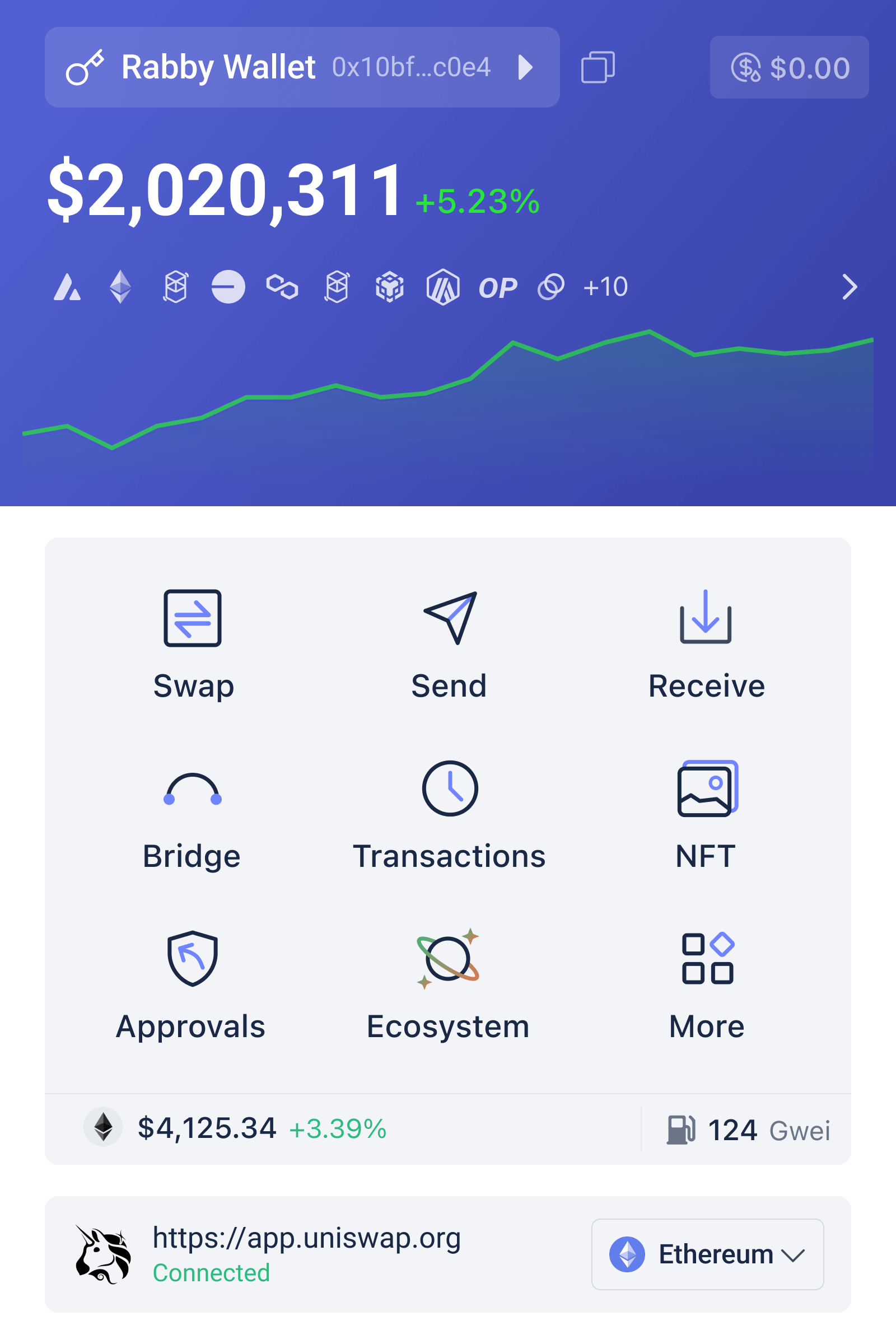
The First Myth: Multi-Chain Means One Unified Blockchain
A multi-chain wallet does not merge Ethereum, layer-2 networks, sidechains, and other compatible ecosystems into one ledger. It provides a common interface for interacting with networks that still operate under different rules. Balances can differ by chain, token contracts can have similar names, and an asset represented on one network may not be directly usable on another without a bridge, exchange, or other conversion mechanism.
This is the first conceptual distinction a new user should make: the wallet interface is unified, but settlement is not. If a user holds a stablecoin on one network, a DeFi application on another network may not recognize it. Even when two tokens share a ticker, their contract addresses and economic roles can differ. The familiar label is a convenience for humans, not proof of identity for smart contracts.
That is why installing a multi-chain wallet should be followed by a chain-by-chain operating habit. Before sending funds or signing an interaction, confirm the selected network, the destination address, the token contract where relevant, and the source of the transaction request. A clean interface can reduce cognitive load, but reduced friction can also make an incorrect action feel deceptively routine.
What Rabby Wallet Can Improve
Rabby Wallet is designed for users who interact with decentralized applications rather than simply hold assets. In practical terms, a browser extension connects a wallet to compatible websites, receives transaction or signature requests, and presents those requests for approval. The important value is not the existence of a “connect wallet” button. It is the possibility of reviewing what an application is asking the user to authorize before the request reaches the blockchain.
For example, a DeFi application may ask a user to approve a token allowance. An allowance is permission for a smart contract to move a specified token from the user’s address, subject to the terms encoded in that approval. This is different from sending a token directly, even though both actions may appear within a familiar application flow. A wallet that surfaces the contract, asset, and intended action can help users distinguish between these operations.
Transaction simulation and risk-oriented warnings, where available, are useful for the same reason: they attempt to translate technical calldata into a more understandable consequence. Calldata is the encoded instruction sent to a smart contract. Most users cannot reasonably inspect it as raw hexadecimal, so interpretation tools can be valuable. Yet interpretation is not omniscience. A simulation depends on the assumptions and information available at the time, and a contract can behave differently under changing market conditions, oracle updates, block ordering, or unusual interactions.
Users can find a current installation path through the rabby extension resource, but the safety principle is broader than any single download page: obtain wallet software from a source you can independently verify, check the domain carefully, and avoid installing extensions promoted through unsolicited messages or paid search results that imitate official branding. In cryptocurrency, the installation step is part of the security model, not administrative housekeeping.
Installation Is the Beginning of Security, Not the End
A browser wallet is exposed to a particularly complicated environment. The browser is where users encounter legitimate applications, cloned websites, malicious advertisements, fake support accounts, and compromised interfaces. Installing the correct extension therefore solves only one problem: authenticity of the software source. It does not establish that every connected website is trustworthy or that every contract interaction is economically sensible.
During setup, the recovery phrase deserves the highest level of protection. It is the cryptographic recovery credential for the wallet, not a login password that can be reset through ordinary customer support. It should never be typed into a website, sent through email, stored in a cloud note, or disclosed to someone claiming to provide technical assistance. A wallet provider should not need the phrase to “synchronize,” “validate,” or “unlock” an account.
For meaningful holdings, a hardware wallet can change the risk profile by keeping key operations in a separate signing device. It does not make a user immune to phishing or bad approvals, and it may introduce usability costs, but it creates a useful separation between browsing and authorization. A sensible arrangement for many DeFi users is to keep experimental activity in a limited wallet while reserving a separate account for assets that should not routinely interact with unfamiliar contracts.
There is also a practical trade-off between convenience and control. A multi-chain interface can help a user manage several networks from one place, but that convenience may encourage larger balances to remain connected to active applications. The more frequently an address signs transactions, the more important it becomes to review permissions, revoke unnecessary allowances when appropriate, and maintain a clear separation between long-term holdings and higher-risk experimentation.
Common Myths Versus the More Accurate Reality
Myth: A wallet warning means the transaction is definitely malicious
Reality: A warning is evidence for caution, not a courtroom verdict. Automated systems may flag unfamiliar contracts, unusual behavior, or a transaction they cannot interpret confidently. A legitimate new application can look risky because it lacks history, while a fraudulent contract may avoid simple detection. The correct response is to investigate the application, contract address, requested permissions, and economic purpose rather than blindly trusting or dismissing the warning.
Myth: A successful simulation guarantees a safe outcome
Reality: A simulation usually describes an expected result under a particular set of conditions. It cannot guarantee that the user is interacting with the intended website, that the asset has real liquidity, that the contract will remain unchanged, or that a market will not move sharply before execution. The simulation is a useful preview, not a substitute for examining the broader transaction context.
Myth: Token approval is harmless because no funds are transferred immediately
Reality: Approval can create a future spending capability for a contract. If the approved amount is unlimited, the potential exposure may be larger than the amount the user intended to trade at that moment. Limited approvals can reduce the blast radius, although they may require more transactions and additional network fees. The trade-off is operational friction in exchange for narrower permissions.
Myth: One wallet address is equally safe on every chain
Reality: The same address format can appear across compatible networks while representing different balances and different application relationships. A user may have no assets on one chain but still sign a malicious transaction there, or may mistakenly send funds to a network where the recipient cannot use them. Network selection is not a cosmetic setting; it determines where the transaction is executed and which assets and contracts are relevant.
A Reusable Review Framework Before Signing
A useful pre-signing routine can be reduced to five questions. What network am I on? Which contract is receiving the request? What asset or permission is involved? What is the maximum economic exposure? What happens if the transaction succeeds but the market moves against me? These questions are deliberately plain. They force the user to connect technical authorization with financial consequence.
The fourth question is especially important because users often focus on the displayed transaction value and overlook permissions. A transaction that transfers a small amount today may grant a contract authority to move more later. Conversely, a transaction with a large visible value may be a legitimate action in a carefully understood protocol. Amount, permission, reversibility, and contract trust are separate dimensions of risk.
It is also worth distinguishing protocol risk from interface risk. Protocol risk concerns vulnerabilities, governance decisions, oracle failures, liquidation mechanics, and economic design. Interface risk concerns fake websites, misleading prompts, malicious browser behavior, and user confusion. A well-designed wallet may reduce some interface risk, but it cannot eliminate weaknesses in a protocol that the user deliberately chooses to use.
What to Watch as Multi-Chain DeFi Evolves
No recent project-specific news is available for the current eligible week, so there is no responsible basis for claiming a newly announced Rabby development or predicting a specific near-term release. The more durable trend is structural: as users move among more networks and applications, wallets are likely to compete on interpretation, permission management, and clarity rather than on simple asset display alone.
If wallet interfaces become better at explaining cross-chain consequences, they could lower the knowledge barrier for ordinary DeFi users. That outcome remains conditional. It depends on accurate simulations, timely contract intelligence, understandable warnings, and users who treat those tools as decision support rather than authorization by default. The strongest signal to watch is not how many networks a wallet lists, but whether it helps users understand what changes on-chain after they click confirm.
Frequently Asked Questions
Is Rabby Wallet suitable for beginners?
It can be useful for beginners who want clearer transaction context while learning DeFi, but it should not be treated as a safety guarantee. New users should start with small amounts, verify applications independently, learn the difference between transfers and approvals, and keep recovery credentials offline and private.
What should I check before downloading the Rabby browser extension?
Verify that the download source and domain are authentic, avoid links from unsolicited messages, review the extension’s requested permissions, and confirm that the installation flow never asks for a recovery phrase through a website. After installation, test with a small amount before relying on the wallet for larger DeFi activity.
Does a multi-chain wallet remove the need for a bridge?
No. A wallet can display or manage assets across networks, but it does not automatically make an asset native to every chain. Moving value between networks still requires a compatible mechanism, and bridges introduce their own smart-contract, liquidity, operational, and counterparty risks.
What is the most important Rabby Wallet security habit?
Read the authorization, not just the transaction amount. Confirm the network, contract, token, approval scope, and expected result before signing. If any part is unclear, pause and investigate rather than assuming that a familiar interface makes the action safe.
The central lesson is simple but easy to lose amid DeFi’s speed: a multi-chain wallet can improve visibility without creating certainty. Rabby Wallet may serve as a useful layer between an application and a user’s private key, particularly when it makes permissions and transaction effects easier to inspect. The final responsibility, however, remains human. In a market built from programmable money, the most valuable feature is not frictionless signing. It is informed hesitation at the right moment.